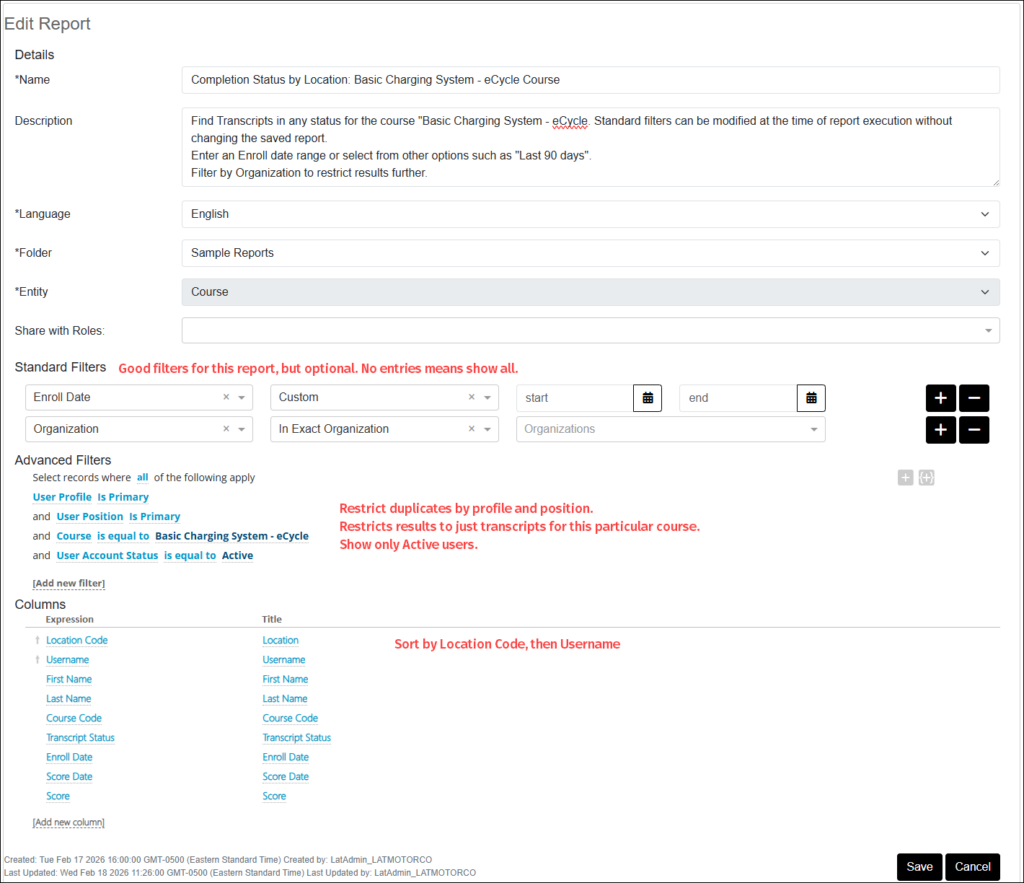
The Course entity in Report Writer is pulling results primarily based on Transcript data and the course, user, and organizational data that is commonly tied to Transcripts.
It is a great entity to select if you want want learner transcript information related to:
It is not the best option if you want:
This page will show you how to create a simple Course Enrollment Status report and give you ideas on how to easily copy it and tweak it to make a Course Completions Report.
Before Your Start
Make sure you understand the general basics of report writing by reviewing Using the Report Writer page. It is also linked in the Useful Links section to the right. This will give you useful details about filters and columns that will not be fully repeated here.
Before writing a report, you should first identify what data you want to extract so that you can consider what needs to be flexible for report runners, what needs to be a permanent filter, and which columns and sorting will provide the best view of the data.
The expandable sections below go through each section of report building. Refer to the overall Using the Report Writer document in Useful Links for additional general details about each section.
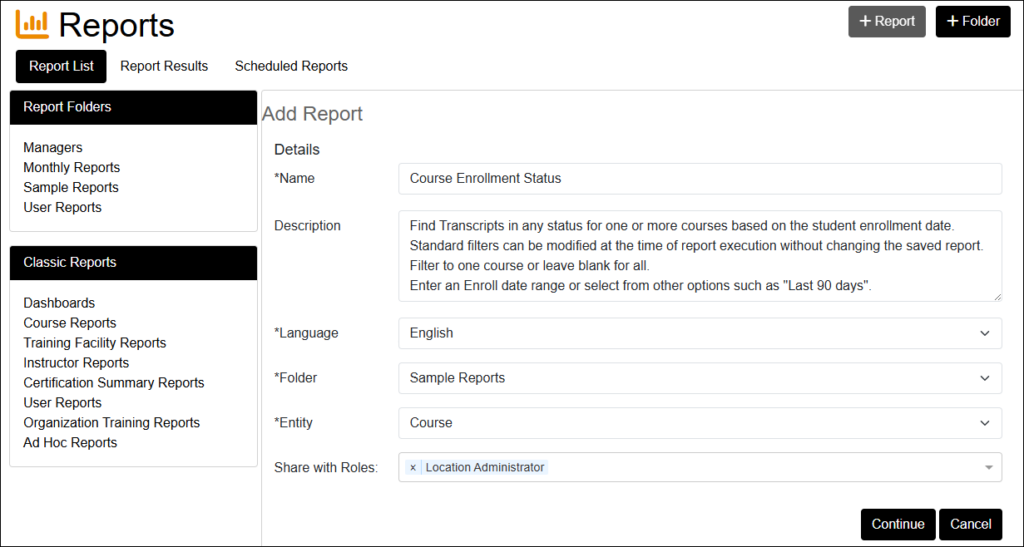
This section helps identify the report and determine which roles besides portal administrator have access to run the report in Report Writer.
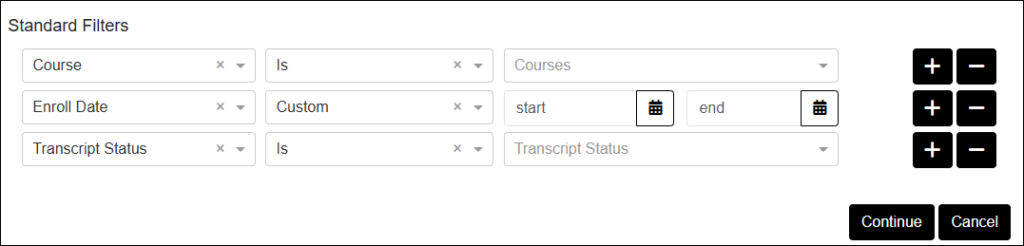
Standard Filters are dynamic and you can change the values and even add more filters to the report when you run it without altering the saved version of the report.
The important concept to understand about Standard filters is that each filter listed is joined by an implied Boolean “AND” operator. This requires your filtering logic to be carefully constructed. You cannot add two standard filters “Course is Basics 101” AND “Course is Advanced 502” because on a single transcript, there is no way to have it represent BOTH courses. The filters are mutually exclusive and your report would show no results.
Standard filters can be set up but it’s not required to provide a value during setup. If left blank, the value can be entered during execution, or not entered at all – in which case, all relevant records would be returned.
Commonly Used Standard Filters
To use more complex and detailed filters, you will need to consider advanced filters.
Click Continue to move on to the Advanced Filters.
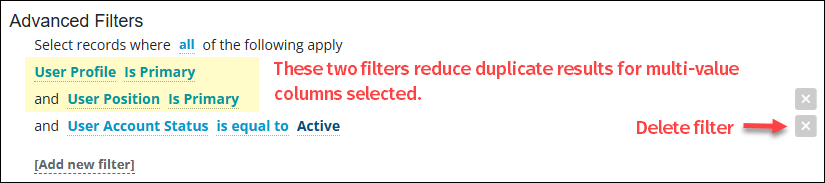
Advanced Filters let portal administrators define more complex criteria that will drive results data. These filters are “hard-coded” into the report and are not displayed to report runners. While Advanced Filters are optional, they are highly recommended for returning expected results. If you prefer a broad data extraction and plan to do more data manipulation in Excel or Access, you can limit the entries here or leave this section blank.
Advanced filters are very useful for:
Commonly Used Advanced Filters
It is important not to create Advanced filters that logically conflict with the Standard filters. This is why describing the report under Description is important for people using the report.
When ready, move to the Columns section.
Decide which data you want to view in your results file and define each as a report Column. Consider how you want to sort them and make sure your primary sort column is before any secondary sorting.
In addition to sorting, once listed, you can rearrange columns by dragging and dropping them into a new position. You can also change the name of the column from its default expression to the title you wish to appear on the report output.
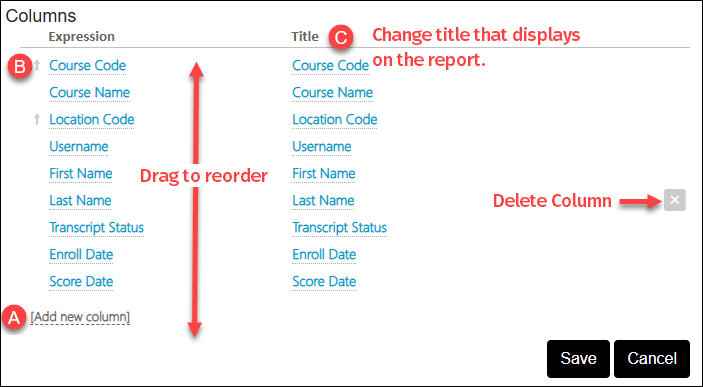
When you are finished, click Save. If you are finished, click Finish. You should then run your new report to test it for accurate results.
Use this as an example to create a flexible report that can find enrollment status for one or all courses in any enrollment status for active users.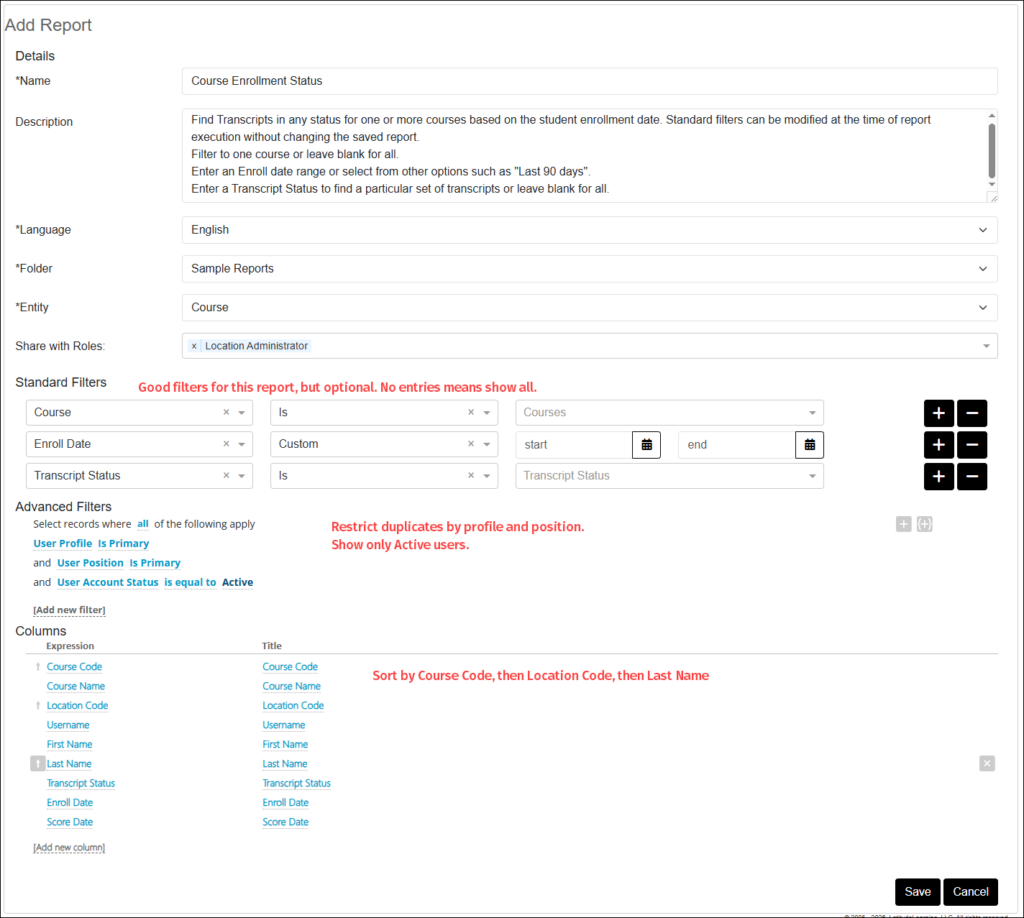
Use this as an example to create a report for one specific course with results for all active users by default. It would show all transcript statuses but they can be filtered later in Excel. To restrict to Passed/Completed transcripts, use the Advanced filter below to get only passed transcripts in results:
Transcript Status IS IN LIST [Pass, Attend No Bill -Pass] would get all completed transcripts that were passed directly or passed through equivalencies.
People can add standard filter values at run-time to restrict data by enroll date, organization, or any filter they want to add “on the fly”.